
Willibrord
Fragments from the Book
Shortly before his passing, Fons de Poel wrote a book about his remarkable colleague Willibrord Frequin.
The title: Shy Rascal.
He wanted to honor Willibrord by ensuring he would not be remembered solely as the proverbial “bastard.” In the book, Frequin emerges as a man for whom boldness was largely a mask to hide his deep sensitivities—a television personality who was a genre in himself.
Below is a brief biography of Willibrord, followed by several excerpts from the book.
Willibrord Frequin
1941 - 2022
Willibrord (1941–2022) was the eldest son of Louis Frequin, the legendary journalist and editor-in-chief of De Gelderlander. It was his father who helped him land a job at Brandpunt, the renowned current affairs program of the KRO. Willibrord started there as a jack-of-all-trades but gradually became part of the reporting team of the Netherlands’ first news magazine.
As a field reporter, he traveled the world, covering famines, earthquakes, and uprisings with unmatched drive and boldness. The Dutch public came to know him as a true news chaser.
After the so-called “heads affair,” he was forced to leave Brandpunt—a decision that hit him so hard, he never spoke of it again.
He went on to join the commercial broadcasters, where he made television history as a populist provocateur. In the face of alleged wrongdoing, he would—often without subtlety but always memorably—hunt down those at the center of the story. Opinions on his methods were sharply divided: you either loved him or couldn’t stand him. One weekly magazine even named him “the most irritating person in the country.”
In the final year of his life, Fons de Poel followed Willibrord day by day.
In Verlegen Vlegel ("Shy Scamp"), a portrait emerges of a socially engaged yet deeply insecure man who had built himself a suit of armor to survive life—terrified not just of death, but above all of being forgotten.


VERLEGEN
VERLEGEN
VLEGEL
VLEGEL
01
is there a life after death?
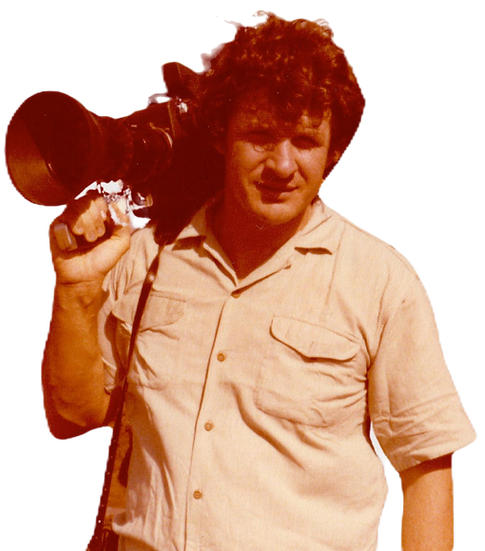
He has just stepped out of the shower. His legs have carried him with difficulty to the living room. With wet hair slicked back, he looks like an elderly Jack Nicholson. Wearing a blazer with a pocket square, he slowly settles into a chair. He has pocket squares in every color and pattern. He clears his throat. Willibrord always clears his throat. Not from age or shortness of breath. For as long as I’ve known him, that dry little cough has served as a bridge between his sentences. He asks me to pour him an ice-cold jenever. – “So, you want to write a book about me?” Little cough. He had been assigned as my mentor, this unusually restless TV-maker, driven by boundless ambition; master of the ambush interview. His cockiness and maximalism, to me, more than made up for his widely criticized shortcomings. Loved, reviled, mocked, cast out, resurrected—a cat with seven lives. He’s nearing eighty now. Little cough. – “Do you think there’s anything after death?” When I dare to express doubt, the twinkle in his eyes briefly disappears. Raised on the promise of heaven, it’s as if the eternal boy has just discovered there will be no angels. “Angels with big breasts,” I still hear him say. – “So you think there’ll be nothing at all?” Maybe a book, Willibrord?

02
At the regular pub
Café Moeke Spijkstra in Blaricum enjoys proverbial fame for its mix of excellent gastronomy, nostalgically warm-blooded interior, quick service, chattering from the posh Gooi crowd, midweek drinkers, television people, corporate types in their leisurewear—and above all, the myth of Thursday night. A legendary “hunker bunker” evening, where female loneliness is soothed in the pursuit of a one-night partnership. And the same goes for the other way around. Of course, you can also just have a beer there. “Moeke” is Willibrord Frequin’s living room. He has his own table, a seat of honor once reserved for emperors and kings in centuries past. You don’t just join him. Those who accidentally sit down are in for an audience—Frequin-style. – “Did I invite you or something?” Sorry? – “Do you have permission to sit here?” Do I need it? – “Oh, you didn’t know that?” No. – “Do I get to choose who I want to sit next to?” It’s become second nature to him—to overwhelm strangers with blunt interrogation tactics. Part of his regular repertoire includes impertinent side questions: “But you still have sex, right?” If you don’t know him, it’s unbearable. If you know him better, it still is. But if you really know him, it’s actually not that bad—it turns out to be a kind of game. A refusal to be ordinary. A need to provoke, wrapped in a layer of irony. Maybe self-mockery is the better word. Those who talk back—and can roll with the mood swings of the conversation—are in for a memorable evening. Then Willibrord reveals himself to be a pretty decent guy. “Even though I thought you were a total dick an hour ago.” And for those who flunk the test, at least they leave with a story. They met that Frequin—and they won’t forget it anytime soon.


03
80 Years of a Bundle of Nerves
His voice is getting softer and softer. Sometimes I have to lean in close to understand him. We’re sitting at the kitchen table. He brings it up himself—a subject I’ve always suspected to be his Achilles’ heel. The tough-guy Willibrord is gone. “It ruined my life,” he says. We’re talking about his nervousness. He’s been a bundle of nerves for nearly eighty years. That’s what it comes down to. His wife Gesina, with her no-nonsense Rotterdam spirit, calls out from the kitchen: “Willibrord is the most insecure man I know.” His life has been, nearly every day, like a final exam. “I did everything—everything—like my life damn well depended on it. I got to do amazing things, see the whole world, I had fun, built a wonderful circle of friends, but…” The sentence falters. “There was always tension in my head and in my body. Strange, right? You just can’t manage to truly enjoy anything. Even though so many people see me as someone who knows how to enjoy life. And I can be that way, sure—but never fully. Inside, there’s a storm. Still. People come up to me on the street these days and say: You were a hero to us. We miss you. Maybe they used to say that, too—but I didn’t hear it. I rushed right past it.” Gesina: “He got arrested a hundred times during his career. But if we’re in the car now and he spots a police car somewhere, he immediately gets nervous. Calm down, man, I say. But it doesn’t help.” He throws me a conspiratorial look. Don’t exaggerate, woman. “He sleeps badly too,” Gesina says. Willibrord: “I wake up four or five times a night. And then I go straight to the fridge and eat everything in it.” Gesina: “You have a lot of nightmares now, too. You never used to.” – “I’m not aware of that.” Gesina walks out of the kitchen to demonstrate what it looks like at night in their marital bed. She stands next to Willibrord and flails her arms wildly. He has to duck to avoid the blows. – “I don’t know anything about that.” “You scream too,” his wife says. “Like someone’s chasing you.” – “I don’t know that either.” She laughs: “Then it’s unconscious domestic violence.” Maybe you’ve always cared too much about what others think of you? Low grumbling sound. He changes the subject—to me. “But are you happy?”


04
On Board with the Holy Father
During the visit to the Netherlands, Willibrord Frequin would not leave the side of JP2 for a single moment. That began with the flight from Rome to Eindhoven, when the Pope—used to throngs of waiting crowds—must have looked out the airplane window in surprise at the small group of people below. With his cameraman and sound technician, Frequin had taken up position aboard the papal aircraft, hoping and expecting that at some point the Holy Father would leave his cabin for a brief encounter with the journalists on board—especially the seasoned Vatican watchers from prestigious media like The New York Times, Le Monde, and Frankfurter Allgemeine. As always, Willibrord and his team had worked out a strategy in advance: if the Pope were to appear, they would immediately try to engage him. No easy task—how do you elbow past all those colleagues? And how do you stop the Pope in a way discreet enough to satisfy Catholic broadcasters and their audience? Given their reputation, the real question was: how do we avoid a total meltdown on the papal plane? To the indignation of rule-abiding colleagues, they ignored the assigned seating that placed them in one row. Instead, they squeezed into seats three rows apart: the sound technician in front, Willibrord in the middle, and cameraman Lajos Kalanos at the rear. This way, when the Pope appeared, they would politely but firmly block the aisle—leaving the Holy Father barely any room to maneuver and ensuring that other journalists would miss out in the first round. That was the plan. … And suddenly, there he is—the Bishop of Rome, Karol Wojtyła. Calmly, he comes forward to greet the press. The trio jumps up—and just as planned, the moment is theirs. After a polite icebreaker (“How are you? Are you speaking Dutch yet?”), Willibrord moves flawlessly into the core question: “Heilige Vater…” What does JP2 think of the state of the Dutch Church? The exchange yields some priceless TV footage. While the Pope barely answers (“Wir werden sehen, wir werden sehen”—We’ll see, we’ll see), you can see, feel, and hear the claustrophobic setting in which the main players—like rats trapped in a corner—groan and strain to remain courteous. Throughout the Pope’s visit to the Netherlands, Frequin stays glued to his side. At the major gathering in the Jaarbeurs convention center, he bluffs his way through security by shouting: “Out of the way, people! I have an appointment with the Pope—he’s expecting me!” … Meanwhile, riots are breaking out in the center of Utrecht. Four thousand demonstrators block the Pope’s access to the main entrance of the Jaarbeurs building. Elsewhere, punks, anarchists, and other protesters pelt the police with stones. Riot police charge the crowd. Two warning shots are fired. Looking back, Willibrord said: “It was shameful. If I’d been there, I’d have punched those guys in the face. That was my Pope.” For Willibrord, the papal visit was more successful than it was for the head of the Catholic Church himself. Nothing went right for the Pope. Even the catering was an insult. Over the course of three days, the Holy Father was served tongue with asparagus five times. Someone had heard it was his favorite.


05
tussen de Oorlogsgraven
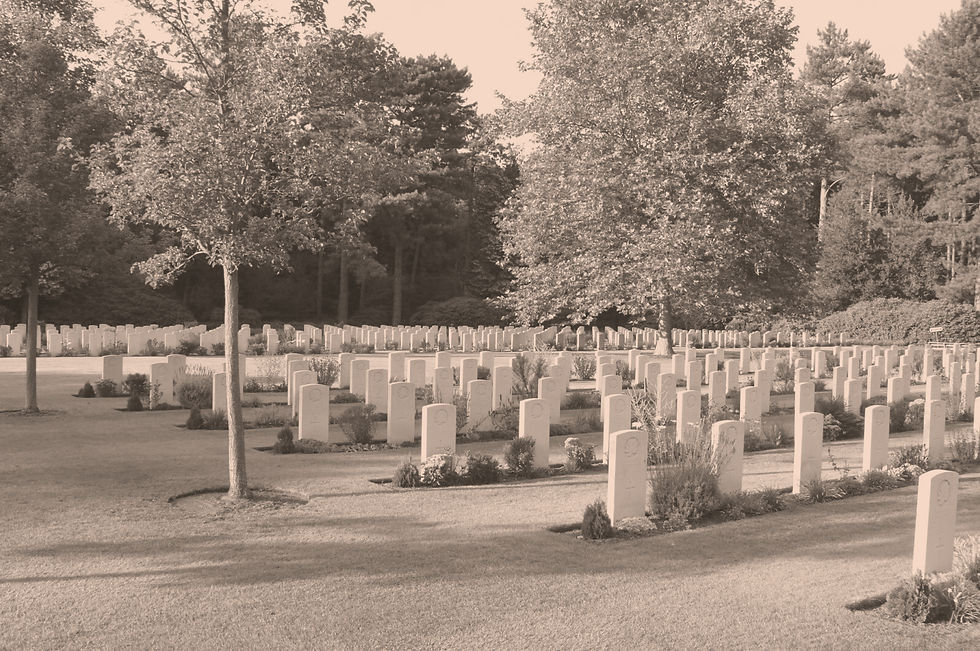
“I’d like to visit the Canadian cemetery,” he had suggested. A field of honor for thousands of soldiers who fell in the Second World War. During the airborne landings of Operation Market Garden, so many paratroopers floated down here that a farmer in Groesbeek said to his wife and children: “There’s confetti falling from the sky.” Upon arrival, he walks over to the guestbook and leaves a brief message in his angular handwriting: Thanks. He pauses here and there among the graves, makes the sign of the cross regularly, and continues to be struck by the ages of the young men—mostly in their early twenties—who made the ultimate sacrifice in towns and villages with unpronounceable names, far from home. It takes him back to his reporting years with Brandpunt, in the days when public broadcasters still concerned themselves with fate and war in distant regions. “Just a few hours’ flight away, the misery began,” I hear him say. “We wanted to bring that misery into our prosperous country. Be a window on the world, as Aad (van den Heuvel) always said. I’ve been everywhere. I’ve seen so many people die.” You keep making the sign of the cross. – “It’s how I was raised.” So God still matters to you? – “For the past few years, I’ve started to really doubt. In Sudan, it became too much for me. All those malnourished children. The helplessness, the injustice. I remember looking up with Lajos. I shouted: God, goddammit, do something, you bastard. That’s not exactly the kind of line that gets you through the pearly gates. I couldn’t understand how He could allow such terrible suffering.” Isn’t that a rather naïve view of God? – “I was raised cheerfully Catholic. With the belief that people should do good. That’s also how we made our reports. And we raised a lot of money—for the poor, the homeless, victims of war, schools, hospitals. All over the world.” Have you ever cried? – “No. It was about the story. Not about us. We went through hell to make something meaningful. I don’t think I could do that anymore.” Why not? – “I just can’t handle it anymore. I turn off the news. I skip the misery in the papers. I can’t even bear to see a person with a disability. Or an old man or woman, walking like this.” He bends forward and imitates the shuffle of an elderly man. You mean… the way you walk? He laughs—but not wholeheartedly.

06
On the ‘Heads Scandal’
– “For the five years that followed, I didn’t sleep a single night. I couldn’t walk down the street without being yelled at. Con man. Liar. Day in, day out. Wherever I went. Sometimes I didn’t even dare to go outside. It was so intense. As if I were wearing a prison uniform. As if I’d done something terrible. I felt like someone who’d been wrongly convicted. I was mentally imprisoned. It has haunted me for the rest of my life. I’ve never been able to shake it off. That’s why I never want to talk about it, never want to be reminded of it. Because I’m afraid that the feelings from back then will come rushing back. I avoid it.”


07
on the way to God
I suggest to him that we return to the image of God from his childhood. What would it be like if the afterlife called to him? He is received by Saint Peter. An entrance exam at the gates of heaven. Peter asks: Have you led an exemplary life? – “Absolutely.” Can you prove that? – “Of course. I’ve devoted myself especially to helping others.” That’s wonderful, Mr. Frequin. But have you also lived in sin? – “Honestly, yes, sometimes.” How so? – “Let’s say marital fidelity wasn’t always my strong suit.” Do you regret that? – “In a way, yes. And in a way, no. I’d have to think about it.” You’re unsure, Mr. Frequin. Did sin also bring you pleasure? – “Oh yes. God created woman. It’s a human duty to enjoy that.” … Mr. Frequin, I face a difficult decision. Will it be heaven, hell, or purgatory? Had you given that any thought? – “I’ve more than earned heaven.” That’s not up to you. – “I still wanted to say it.” I propose to him that he enters the realm of angels and sees the almighty man he grew up with as a child—sitting on a little cloud with a long beard: God. What would you ask Him? – “I’d start by saying something.” What? – “That it’s a disgrace that He has allowed so much misery in the world. All that suffering. All those wars. The extermination camps. All that hunger.” … It’s an easy role switch—from Saint Peter, I become God. Dear Willibrord, from day one I’ve said that man has free will. – “That’s a lousy excuse. What nonsense. God is God. I was taught: God is good and God is almighty. You should have stopped Hitler, Stalin, Amin, and all those other bastards. They were even allowed to misuse your name—from the Crusaders to the Taliban.” I’m used to being addressed as You with a capital ‘Y’. – “You’ve made a mess of things. I hold You deeply accountable for that. You’ve made me sad. Even aggressive. I’d like to take over Your job for a while. I’d teach a lesson to all those with bad intentions—remove them. You need to do what You promised: a peaceful, loving society. The earthly paradise. You’ve made humanity a miserable species. Look at the dissatisfaction, the unease—even in wealthy countries. Doctors, psychologists, psychiatrists—they can’t keep up. You have no idea how many people feel abandoned by You. People who have no sense of safety. For whom life is a burden. I’ve had plenty of fun in my life, sure, but misery hangs over the earth like a veil. It’s heavy—and that’s how I’ve experienced it too. I’ve always taken it deeply to heart. Maybe too much. So finally, do something about it, man. Where are Your angels? Where’s the bar?” He means it.


Boek is o.m verkrijgbaar bij:


